
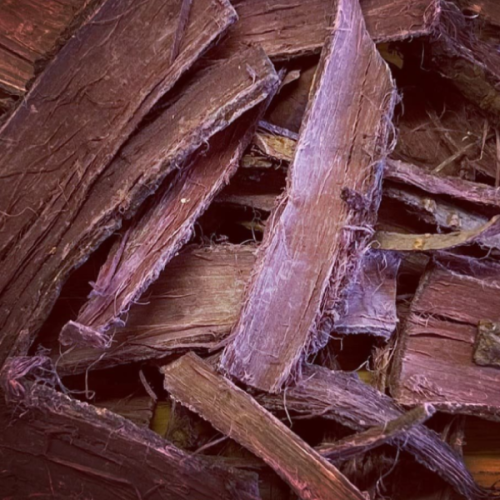
Whole, Shredded or Powder: Which Mimosa Hostilis Root Bark Should You Buy?
All three forms are the same inner root bark. The only difference is how far it has been cut, and that decides how easy it is to use for your project.
| Whole | Shredded | Powder | |
|---|---|---|---|
| What it is | Uncut pieces of bark | Bark chopped into small chips | Bark ground to a fine powder |
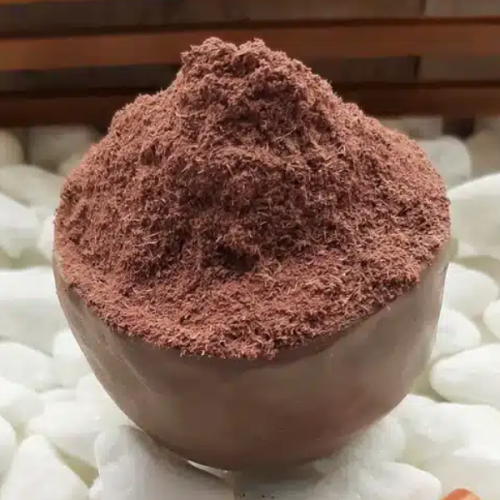
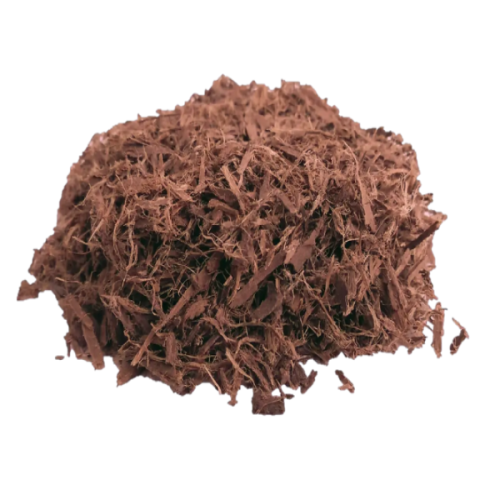
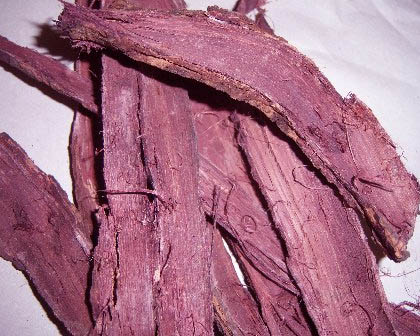
| Best for | Bulk buyers, long storage, cutting to your own size | Dye baths and infusions | Soap, masks, scrubs and fast dye baths |
| Colour release | Slowest; needs a long simmer | Fast | Fastest and strongest for its weight |
| Straining | Easiest | Easy | Needs a fine cloth |
| Storage | Keeps longest | Keeps well | Use sooner; keep sealed and dry |
| Current prices | Whole bark price list | Shredded bark price list | Powder price list |
Choose whole bark if
You buy in quantity, want to inspect every piece, or plan to cut or grind it yourself. Whole root bark also gives you the most control: coarse for long dye baths, fine for everything else.
Choose shredded bark if
You dye fabric or yarn. The chips release colour quickly, lift out of the pot without fuss, and can be simmered a second time for a lighter shade. Shredded root bark is also the practical form for oil and water infusions.
Choose powder if
You make soap or skincare. Root bark powder measures by the teaspoon, blends straight into a formula, and gives the deepest colour from the smallest amount. For dyeing it works fast, but you will need to filter the bath well.
Still unsure?
For a first dyeing project, start with shredded. For a first soap batch, start with powder. If you run a studio or a product line and want the lowest cost per kilogram, buy whole bark in bulk and process it as you need it.
What about price?
Whole bark costs the least per kilogram, shredded sits in the middle and powder costs slightly more, because each step of cutting and milling adds work. The gap is small at every size, so let the project decide and not the price. Time lost filtering a dye bath or grinding bark by hand is worth more than the few dollars between them. Current prices are on the whole, shredded and powder pages, and orders of 5 kg and above are on the wholesale page.
Can you turn one form into another?
Only in one direction. Whole bark can be cut into chips, and chips can be ground into powder, but powder cannot go back. That is why studios that do several kinds of work often keep whole bark as their main stock and process a little at a time. To do that you need heavy shears and a grinder that can cope with fibrous material. If you do not have them, buy the form you need.
How much should you buy?
For dyeing, plan on the same weight of bark as dry fibre for a deep shade and half that for a lighter one. A 500 g bag covers roughly five skeins of yarn or three T-shirts at full strength, and twice that for lighter colours.
For soap, the starting rate is about a teaspoon of powder per pound of soap, so a 500 g bag lasts a hobby soap maker a long time. Buy the smallest size first.
For a studio or a product line, work out what you use in a month and buy two or three months at a time. Bark stores well, and the price per kilogram drops at every size step.
Three mistakes we see often
Buying powder for a first dye project. It works, but the filtering puts beginners off. Shredded bark is kinder.
Buying whole bark with no way to cut it. It is tough and fibrous. Kitchen scissors will not last long.
Buying too little for a deep shade. If you want strong colour on a kilogram of fabric, you need about a kilogram of bark.
Which form for which project
| Project | Form to buy | How much |
|---|---|---|
| Dye fabric or yarn | Shredded | Equal to the fibre weight for a deep shade, half for a light one |
| Cold process soap | Powder | About 1 teaspoon per pound of soap |
| Infused oil | Shredded | 100 g per 500 ml of oil |
| Balm or salve | Shredded | Through an infused oil: 8 parts oil to 1 part beeswax |
| Masks and scrubs | Powder | A pinch per use |
| Tannin wash for wood | Powder | 1 heaping tablespoon per pint of hot water |
The project planner works these out for any batch size and gives you the steps to print.
Processing whole bark at home
If you buy whole bark to save money or to keep your options open, this is the routine that works.
- Check it is dry. Bark that feels at all damp will clog a grinder. Leave it spread out in a dry room for a day first.
- Cut it short. Use garden shears or heavy scissors to cut the strips into pieces about a finger joint long. These pieces are already usable as shredded bark for a dye pot.
- Grind in small batches. A sturdy spice or coffee grinder copes if you fill it a third full and pulse it. The bark is fibrous, so long runs overheat the motor.
- Sieve it. Pass the powder through a fine kitchen sieve. Regrind what stays behind, or keep the coarse part for dyeing.
- Store each grade separately in sealed, labelled jars, and wear a dust mask while you work.
Process only what you need for the next few weeks and leave the rest whole. That is the whole point of buying it this way.
Buying for a business
Studios and small brands usually settle on one of two patterns. Dye studios buy shredded in 5 kg or 10 kg bags, because they use it as it comes. Soap and cosmetic makers buy powder in smaller bags more often, because they use little and want it fresh. If you do both, whole bark in bulk plus a grinder is the cheapest route per kilogram. Bulk rates from 5 kg are on the wholesale page.
Quick answers
Is one form stronger than the others? No. It is the same bark. Powder only releases its colour faster because more of its surface touches the water.
Which form keeps best? Whole, then shredded, then powder.
Can I order more than one form? Yes, and many customers do: shredded for the dye pot and powder for soap.
How to store it
Keep any form in a sealed container, away from light, heat and moisture.
Our bark is sold for dyeing, soap making and external cosmetic use only.
More guides: how to dye fabric with the bark and how to colour handmade soap.
Check the price lists on each product page for current prices.
Free Delivery
(2-3 Days)
Overnight (24hrs) Delivery
($20)
Opening Hours
(9AM to 6PM Monday To Saturday)