What Is Mimosa Hostilis Bark Used For? Discover Its Uses
From Dye Pot to Skincare: The Versatile Uses of Mimosa Hostilis Bark
Jurema, or Mimosa hostilis (also called Mimosa tenuiflora or tepezcohuite), is a tree with a long history in Mexico and South America. People there have used its root bark for generations. Here is what it has traditionally been used for and how makers use it today.
Traditional Uses:
- Dyeing and tanning: Mimosa hostilis inner root bark is rich in tannins. Communities have long used it to color textiles in purples and browns and to tan leather.
- Skin preparations: In Mexico, where the tree is known as tepezcohuite, the powdered bark has traditionally been applied to the skin and is still a familiar ingredient in local creams and soaps.
Modern Uses:
- Natural dyeing: Dyers use whole, shredded or powdered bark to color cotton, wool, silk and linen without synthetic dyes.
- Soap making: The bark gives handmade soap a natural purple-brown color.
- Skincare: Jurema bark is showing up more often in natural creams, lotions and masks made for external use.
Important Considerations:
- Scientific research: Traditional uses are well documented, but cosmetic benefits have not been evaluated by regulators, so treat them as tradition and not as medical claims.
- External and craft use only: Our bark is sold as a raw material for dyeing, soap making and cosmetics. It is not for human consumption.
The tree behind the bark
Mimosa tenuiflora is a small, thorny tree that grows from southern Mexico down to northeastern Brazil. Botanists once described it under a second name, Mimosa hostilis, and that older name stuck in the trade, which is why you see both. In Mexico it is tepezcohuite. In Brazil it is jurema preta. Sellers often shorten it to MHRB, for Mimosa hostilis root bark. They all refer to the same plant.
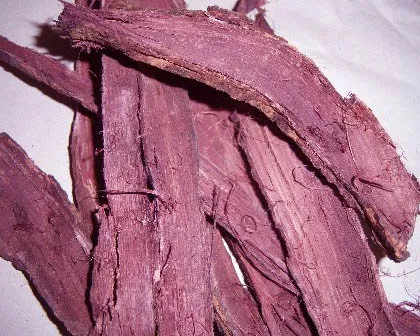
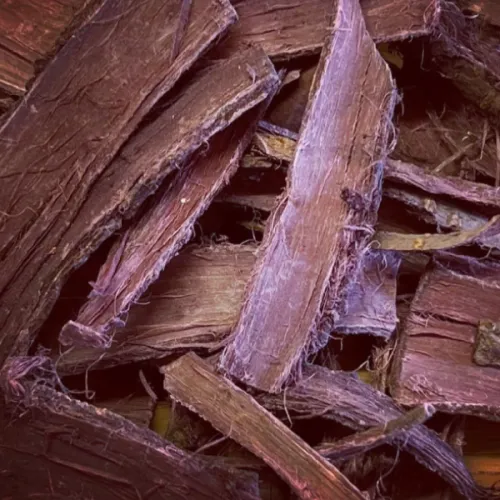
The part that matters to dyers and makers is the inner root bark, the reddish-purple layer under the rough outer bark. That is where the tannins and pigments are concentrated.
Which form suits which use
| What you want to do | Form to start with | Why |
|---|---|---|
| Dye fabric or yarn | Shredded | Releases color quickly and strains out with a sieve |
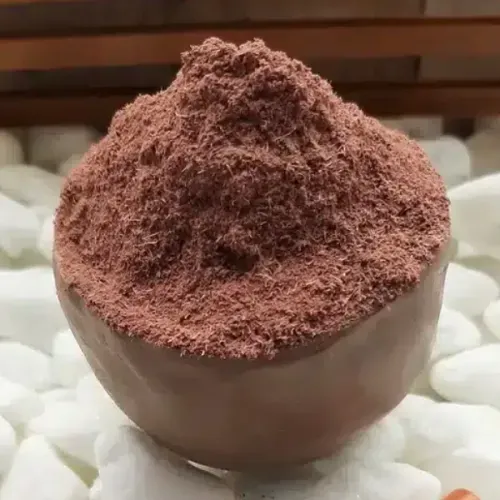
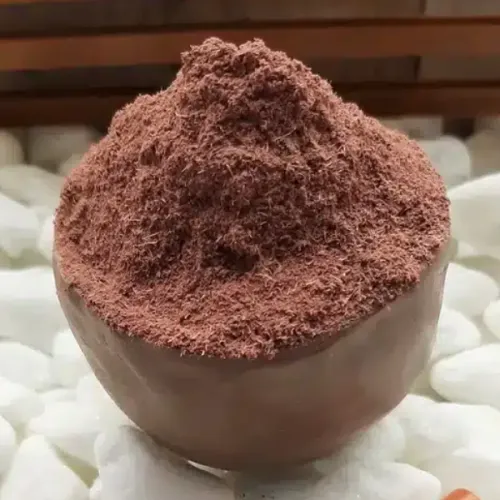
| Color cold process soap | Powder | Measures by the teaspoon and blends in at trace |
| Make an infused oil for balms | Shredded | Easy to strain, leaves no grit |
| Make masks and scrubs | Powder | Fine enough to mix into a paste |
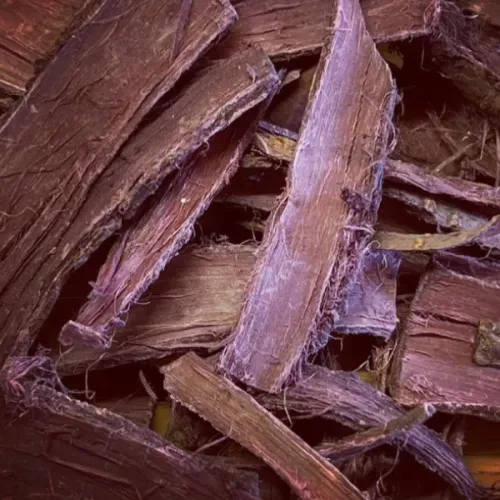
| Stock a studio or product line | Whole | Lowest cost per kilogram and keeps longest |
There is a fuller comparison in whole, shredded or powder: which should you buy.
Dyeing in a little more detail
The bark gives browns that lean pink, red or purple, depending on the fiber, the water and how much you use. It works on natural fibers: wool, silk, cotton and linen. A typical first project is a skein of yarn or a cotton T-shirt, a pot you keep for dyeing, and about the same weight of bark as fiber. Our step-by-step dyeing guide covers quantities, mordants and what to do when a color comes out patchy.
Soap and skincare in a little more detail
In soap the bark is a colorant first. A teaspoon of powder in a pound of soap gives a warm brown bar, and the fine particles add a light scrub. Makers who want smooth bars infuse the bark in oil instead. The soap coloring guide explains both, and the skincare guide covers masks, infused oils and patch testing.
What the tree is like
Botanists describe Mimosa tenuiflora as a shrub or small tree, usually between 1 and 8 meters tall, with reddish-brown to gray bark that is fibrous and resinous. In Mexico it grows wild in Oaxaca and Chiapas, from sea level to a little over 1,100 meters, and its range continues through Central America to Colombia, Venezuela and Brazil. It favors dry forest, thorny scrub, roadsides and abandoned fields. It drops its leaves in the dry months, roughly December to May, and flowers and fruits from November to June.
How people in Mexico have used it
A field study of the tree in Mexico recorded its everyday uses, and most of them have nothing to do with cosmetics:
- Fuel. The wood is burned as firewood and made into charcoal.
- Fencing. The posts are used for fences and corrals, and the tree is planted as a living fence.
- Leather and cloth. The tannins in the bark are used for working leather and for dyeing fabric.
- Skin preparations. The bark is prepared as a strong tea, a powder or an ointment and applied to the skin.
The same study points out that its fame as a skin product is recent. It dates from the 1980s, when media reports made tepezcohuite a household name in Mexico, and the author notes that the scientific results on its effects were not conclusive. That is why we describe the skin uses as tradition and sell the bark as a craft material.
Woodwork
One use is easy to overlook. Because the bark is rich in tannin, a strong tea made from the powder can be brushed on to pale woods before an iron and vinegar solution, which then reacts with the tannin and darkens the surface. Woodworkers call this ebonizing. The method was published for another tannin-rich bark, so try it on an offcut first. The amounts are in the project planner.
Getting started
Pick one project and buy for that. For a first dye bath, 500 g of shredded bark is plenty. For a first soap batch, 500 g of powder will last through many batches. If you already know you will use it regularly, compare the price per kilogram on the larger sizes, or look at the wholesale page for 5 kg and above.
Quick answers
Are tepezcohuite, jurema preta and MHRB different products? No. They are different names for the bark of the same tree.
Is it safe to eat or drink? No. Our bark is sold for dyeing, soap making and cosmetic crafts only.
How should I store it? In a sealed container, somewhere cool, dry and dark.
If you want to buy Mexican Mimosa hostilis root bark for your dye, soap or skincare projects, Mimosa Root Bark Store supplies it whole, shredded and powdered.
Sources
Free Delivery
(2-3 Days)
Overnight (24hrs) Delivery
($20)
Opening Hours
(9AM to 6PM Monday To Saturday)