
How to Ebonize Wood with Mimosa Hostilis Root Bark
To ebonize wood, brush on a strong tea made from bark powder, then brush on a solution of steel wool dissolved in vinegar. The iron reacts with the tannin from the bark and turns the wood black.
Ebonizing means making wood look like ebony. This method is not a paint or a pigment stain. The color forms inside the wood fibers, so the grain still shows.
One honest note before you start. The best published recipe was written for quebracho, another tannin-rich bark. Mimosa hostilis root bark is also rich in tannin and has a long history in leather tanning. We use the same starting amounts here. Always test on an offcut of your own wood first.
How it works
Tannins are plant compounds. They grab hold of iron.
A 2023 paper in the Journal of Wood Science studied this reaction closely. Where wood holds plenty of tannin, the iron and tannin join into dark compounds. Where wood holds little tannin, the iron forms rusty or gray compounds instead.
That is why oak goes black on its own, and maple goes a weak gray. The bark tea fixes this. It loads the surface with tannin before the iron arrives.
Dyers use the same reaction. It is how iron turns a tannin dye gray on cloth, as our fabric dyeing guide explains.
Which woods need bark tea
| Wood | Natural tannin | Iron alone | With bark tea first |
|---|---|---|---|
| Oak, walnut, cherry, mahogany | High | Darkens well | Deeper, more even black |
| Maple, birch | Low | Weak gray | Needed for a real black |
| Pine, poplar | Low | Gray, aged look | Needed for a real black |
| Beech | Low | Little response | Test first |
Woodworking guides agree on the pattern. Hardwoods usually hold more tannin than softwoods. The Popular Woodworking method shows bark tea on oak and walnut too, not only on maple.
What you need
- Mimosa hostilis root bark powder
- White distilled vinegar
- Super fine steel wool, grade #0000
- A plastic or glass container with a lid you can vent
- Coffee filters and a sieve
- Two cheap brushes, one for each liquid
- Gloves and a dust mask
- Sandpaper up to 220 or 320 grit
- Offcuts of the same wood for testing
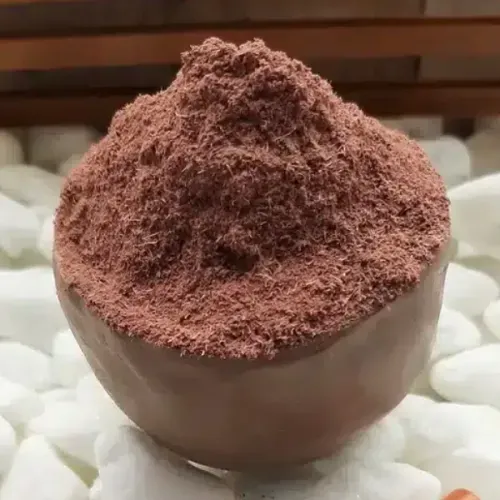
Powder is the right form for this job. It mixes into water quickly. See our root bark powder.
Amounts at a glance
| You are making | Mix | Makes about |
|---|---|---|
| Iron solution, small | 3 g steel wool in 250 ml vinegar | 1 cup |
| Iron solution, medium | 6 g steel wool in 500 ml vinegar | 1 pint |
| Iron solution, large | 11 g steel wool in 1 US quart vinegar | 1 quart |
| Bark tea, small | Half a heaping tablespoon of powder in 1 cup hot water | 1 cup |
| Bark tea, standard | 1 heaping tablespoon of powder in 1 pint hot water | 1 pint |
| Bark tea, large | 2 heaping tablespoons of powder in 1 quart hot water | 1 quart |
The iron amounts follow the wood science paper. It recommends 85 ml of white vinegar for each gram of #0000 steel wool. The bark amount follows the Popular Woodworking recipe of one heaping tablespoon per pint.
Step by step
Step 1: make the iron solution
Do this several days ahead.
Weigh the steel wool and put it in the container. Pour in the vinegar. Push the wool under the surface. Wool that floats tends to rust.
Do not seal the lid. The reaction gives off hydrogen gas, and a sealed container can burst. Make a small hole in the lid, or rest the lid loosely on top. Keep the container somewhere airy, away from flames and sparks.
Wait at least three days. In the paper's tests, the solution reached working strength in about three days. Many woodworkers leave it a week.
Strain it through a coffee filter set in a sieve. The liquid can look pale gray, yellowish or reddish-brown. All of these work. It should be clear, not cloudy.
Then test it. Brush a little on a scrap of oak or cherry. It should darken within minutes.
Step 2: prepare the wood
Finish all cutting, routing and shaping first.
Sand the surface well. Then raise the grain. That means wiping the wood with clean water, letting it dry, and sanding off the fibers that stand up. Do this twice. Water-based liquids will raise the grain again if you skip it.
Stop sanding at 220 to 320 grit. Finer paper polishes the surface, and the liquids soak in less.
Step 3: mix the bark tea
Make the tea fresh, just before you use it.
Put one heaping tablespoon of bark powder in a jar. Add a couple of tablespoons of water and stir it to a smooth paste. Then top up with a pint of hot tap water and stir again. The paste step stops lumps.
Wear a dust mask while you measure the powder.
Step 4: brush on the tea
Flood the surface with tea and let it soak in.
Wait until the wet shine has gone. The wood should be damp, not wet and not dry. This timing matters. On damp wood the reaction happens inside the fibers. On wet wood it happens in the puddle on top.
Step 5: brush on the iron
Use the second brush. Never dip a tea brush in the iron, or the other way round.
Brush the iron solution on with light strokes. The wood starts to darken within minutes. Keep going until every part is black.
Do not scrub with a rag. Pressure flattens the fibers, and the color then sits on top and wipes off.
Step 6: dry, buff and rinse
Let the piece dry for a few hours. Buff it with a clean, dry cloth.
Now brush on a second coat of bark tea. Think of it as a rinse. It clears the chalky look the iron can leave. Let it dry, then buff again.
Finish with a wipe of clean water. Let the wood dry fully.
Step 7: add a finish
The black needs a clear finish to protect it. Let the wood dry completely first.
The author of the method we follow prefers natural oil finishes. Other woodworkers use shellac, lacquer or varnish. Whatever you choose, try it on your test piece first. A finish can change how deep the black looks.
Fixing common problems
| Problem | Likely cause | What to do |
|---|---|---|
| Color wipes off | Fibers were pressed flat by rubbing | Sand with 180 then 220 grit and start again with light strokes |
| Chalky or dusty film | Tea too strong or lumpy | Brush on a second tea coat, dry and buff. If solids have built up, sand and start again |
| Gray, not black | Wood is low in tannin | Apply tea first, then iron again |
| Pale pores in oak | Liquid is not getting into the pores | Add one drop of dish soap to the liquid |
| Blue or inky tint | Pure tannic acid powder was used | Use bark tea instead |
| Pale patches after sanding | You sanded through the black layer | Do not sand after ebonizing. Treat the patch again |
| Iron solution does nothing | Too young, or made with cider vinegar | Wait longer. Use white distilled vinegar |
| Streaks of the wrong color | Brushes or jars got mixed up | Keep one brush and one jar for each liquid |
The sanding warning has a measured reason. The paper measured thin samples of cherry and red oak. The color reached only about 0.06 to 0.12 mm into the wood. That is about the thickness of a sheet of paper. One careless pass with sandpaper can go straight through it.
Bark tea, tea bags or tannic acid?
| Tannin source | Starting amount | What published guides report |
|---|---|---|
| Black tea bags | 10 bags per quart of hot water | Cheap and easy, helps low-tannin woods |
| Quebracho bark powder | 1 heaping tablespoon per pint | Deep black, the method we follow |
| Tannic acid powder | Varies | Can leave a bluish, marker-ink tint |
| Mimosa hostilis root bark powder | 1 heaping tablespoon per pint | A tannin-rich bark. Test on an offcut |
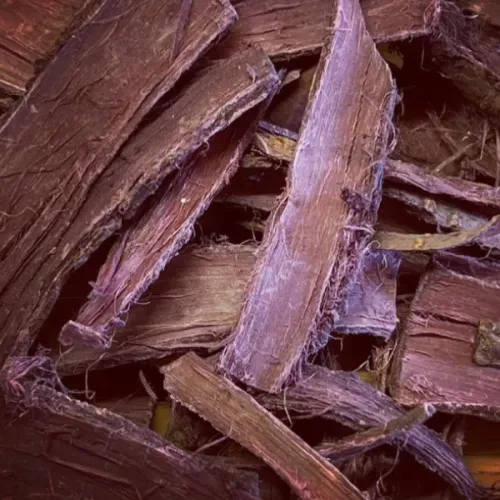
Both barks were used to tan hides because they hold so much tannin. That shared history is why this bark suits the job.
Why not just use black stain or ink?
You can. India ink gives a true black. It works like thin paint that soaks in, with no chemical reaction.
Ebonizing with tannin and iron is different. The color forms in the wood itself, so the grain and figure stay crisp. And it suits makers who prefer simple materials: bark, vinegar and steel.
Safety
- Vent the iron container. It gives off hydrogen gas while the wool dissolves.
- Work with good airflow, away from flames.
- Wear gloves. Both liquids stain skin, clothes and benches.
- Wear a dust mask when you handle bark powder.
- Keep jars, brushes and spoons out of the kitchen.
- Label both liquids and store them away from children and pets.
Our bark is sold for dyeing, soap making, external cosmetic crafts and woodwork. It is not for consumption.
Quick answers
How long does the iron solution keep? The Popular Woodworking author says it keeps for months. It does change slowly as it ages, so test it on a scrap before each project.
Do I need to wash the steel wool first? Many guides say yes. The wood science paper tested it and found no real difference.
Can I use apple cider vinegar? White distilled vinegar is the safer choice. In the paper's tests, cider vinegar reacted slowly and unevenly.
Does a second coat of iron make it blacker? Not much. In the paper's tests, a second application did not darken the wood further. Extra tannin helps more.
Can I ebonize pine or maple? Yes, but they need the bark tea. On their own they turn gray.
How much bark do I need? Very little. One heaping tablespoon makes a pint of tea. Our project planner works out the amount for your piece.
Which form of bark should I buy? Powder. It mixes straight into hot water.
Sources
- Popular Woodworking: ebonizing wood with bark tea and iron
- Journal of Wood Science (2023): iron acetate solution from steel wool and vinegar for ebonizing wood
- Woodworkers Guild of America: ebonizing wood
- Australian Wood Review: how to ebonise wood
- Turn A Wood Bowl: ebonizing wood techniques
- Woodworking Network: staining and ebonizing
- Zeugmatic workshop notes: iron method and India ink
- Camargo-Ricalde (2000), Mimosa tenuiflora in Mexico: tannin and tanning
Free Delivery
(2-3 Days)
Overnight (24hrs) Delivery
($20)
Opening Hours
(9AM to 6PM Monday To Saturday)