What Is MHRB? Mimosa Hostilis Root Bark Explained
MHRB stands for Mimosa hostilis root bark. It is the dried bark from the roots of a small tree. Crafters buy it as a natural source of tannin for dyeing, soap and woodwork.
The same bark goes by many names. That causes a lot of confusion. This guide sorts out the names, describes the tree, and sets out what published research says about the bark. It also explains why the bark is not for eating or drinking.
What the letters stand for
M is for Mimosa. H is for hostilis. RB is for root bark.
The short form does not appear in the botanical papers we read. It is shop and forum shorthand. If you see MHRB, Mimosa hostilis root bark and tepezcohuite bark on three labels, you are looking at one material.
One tree, many names
| Name | Where you see it | What to know |
|---|---|---|
| MHRB | Online shops, forums | Short for Mimosa hostilis root bark |
| Mimosa hostilis | Shop labels | An older Latin name, published in 1875 |
| Mimosa tenuiflora | Botany, research papers | The accepted Latin name, published in 1810 |
| Tepezcohuite | Mexico, skincare labels | Also spelled tepescohuite |
| Árbol de la piel | Mexico | "Skin tree," a name in popular use from 1987 |
| Jurema preta | Brazil | "Black jurema" |
| Calumbi | Brazil | A regional name |
| Carbón, carbonal | Honduras | Carbón is Spanish for charcoal |
The Mexican name has a plain meaning. One author cited in the main botanical study reads it as "tree of the hill."
Why it has two Latin names
Botanists described this tree more than once.
It was first named Acacia tenuiflora in 1806. In 1810 it was moved to the genus Mimosa. That made it Mimosa tenuiflora.
Later, the name Acacia hostilis was published in 1823. It became Mimosa hostilis in 1875.
Botanists now treat both as one species. The World Flora Online plant list gives Mimosa tenuiflora as the accepted name. It lists Mimosa hostilis as a synonym, which means another name for the same plant.
So "hostilis" and "tenuiflora" on a label are not two grades. They are two names for one tree.
What the tree looks like
The best description comes from a field study in Mexico, published in 2000. The author measured 225 plants in the wild.
- Size. A shrub or small tree, from 1 to 8 meters tall.
- Thorns. Some plants carry prickles. Others have none.
- Leaves. Feathery, with many pairs of tiny leaflets about 3 to 6 mm long.
- Flowers. Held in spikes about 3.5 to 6 cm long.
- Pods. Flat, 2 to 4.5 cm long, breaking into segments.
- Season. Flowers and fruit appear from about November to June.
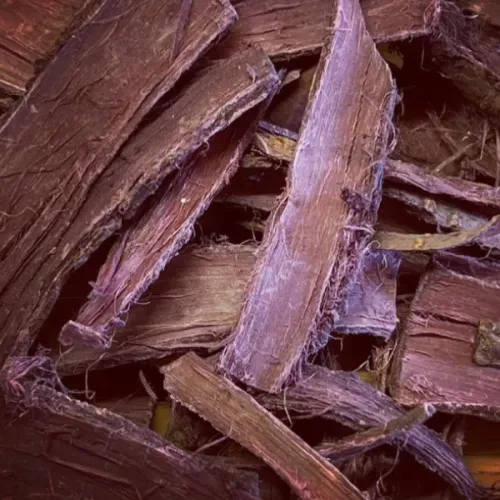
The bark is rough and fibrous. It runs from reddish-brown to gray. The study calls it astringent and high in tannin. Astringent means it gives that dry, puckering feel, like strong black tea.
Where it grows
The tree grows in two separate regions. One is southern Mexico, in the states of Oaxaca and Chiapas. From there it runs through Central America to Colombia and Venezuela. The other is northeastern Brazil.
In Mexico it was found from sea level up to about 1,110 meters. It likes dry forest, scrub, roadsides and fallow fields. The study describes it as an opportunist. It moves in where people have cleared land.
Our bark comes from Mexico.
What "root bark" means
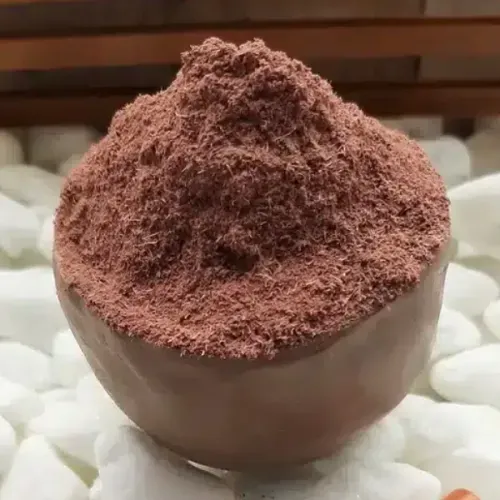
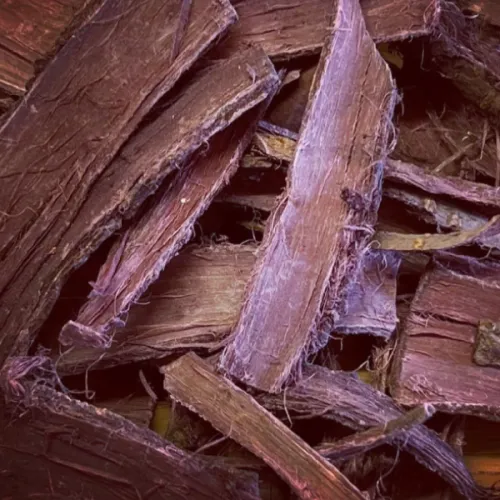
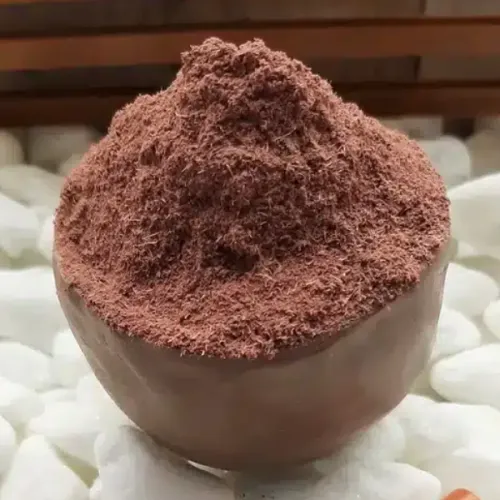
Root bark is bark taken from the roots of the tree, not from the trunk. It is dried, then sold whole, cut into shreds or ground to powder.
All three forms are the same bark. Only the size of the pieces changes. Our guide to whole, shredded or powder helps you pick one.
What is in the bark
Tannins come first. A tannin is a plant compound that binds to proteins and to metals. That one property explains most craft uses.
- Tannins bind to animal hide. That is how leather is tanned.
- Tannins cling to cotton and linen. That helps dye hold.
- Tannins react with iron and turn dark. Dyers and woodworkers both use that.
The Mexican study records exactly these uses. It notes that the bark's tannins were used to tan leather and to dye fabric.
Published reviews list other groups of compounds too. These include saponins, which are soap-like plant compounds. They also include plant sterols, sugars and a small alkaloid fraction. We mention them for completeness. We make no claim about any of them.
How people have used the tree
Most recorded uses are practical ones.
In Mexico and Central America, the wood is burned as firewood and made into charcoal. It is cut for fence posts and planted as living fences. The bark supplied tannin for leather and cloth.
The bark is also known for use on skin, as a powder or in ointments. This is where the tepezcohuite name became famous. The Mexican study links that fame to a run of disasters in the 1980s. These included a 1982 volcanic eruption in Chiapas, a 1984 gas explosion near Mexico City and the 1985 earthquake. Television coverage did the rest.
One finding surprises people. The author looked for older records and found no pre-Hispanic medical use in Mexico. The study describes the skin use as taken up and sold from 1986. So claims of "ancient Mayan medicine" do not match that study.
Our skincare guide covers the research on skin in more detail.
Why MHRB is not for eating or drinking
We sell this bark for dyeing, soap making, external cosmetic crafts and woodwork only. Here is what published sources say about taking it by mouth.
Its safety has not been properly studied. A 2008 scientific review of the plant found no systematic safety assessment. Many of its folk uses had never been examined at all.
Animal findings give reason for caution. In a 2007 veterinary study, four pregnant goats were fed the fresh green plant. They gave birth to four kids. Three had birth defects. The other goats in the study, on different feed, had nine normal kids.
That study has clear limits. It used four goats. It used the fresh green plant, not dried root bark. Goats are not people. Still, no one has shown that eating the plant is safe.
Health writers reach the same view. A medically reviewed Healthline article does not recommend oral use. It gives the unknown safety profile as the reason.
So we do not sell it as food, a supplement or a remedy. We will not advise on any such use.
How MHRB is sold
| Form | What it is | Suits |
|---|---|---|
| Whole | Strips of dried bark | Long storage, cutting to size yourself |
| Shredded | Bark cut into fibers | Dye baths and infused oils |
| Powder | Finely ground bark | Soap, masks and wood tannin washes |
We sell whole, shredded and powdered bark from 500 g to 100 kg. Lab results and a certificate of analysis are available on request.
Rules on this plant differ from place to place. Check the rules that apply where you live before you order.
Common mix-ups
Thinking "mimosa extract" in a dye shop is the same thing. It is not. Dye suppliers use "mimosa" for an extract of black wattle, Acacia mearnsii. One major supplier says it gives a light peach color. That is a different tree and a different result.
Treating hostilis and tenuiflora as two products. They are one species. Compare price, form and origin instead.
Believing every claim of ancient use. The record for practical uses is solid. The record for old medical use in Mexico is not, as the study above shows.
Assuming more names means more quality. A label with five names tells you nothing about the bark. Ask where it is from and whether lab results are available.
Quick answers
Is MHRB the same as tepezcohuite? Yes. Tepezcohuite is the Mexican name for the tree and its bark.
Is jurema preta the same tree? Yes. It is the name used in Brazil for Mimosa tenuiflora.
What color does it give? In a dye bath it gives browns that lean pink, red or purple.
What is MHRB used for? Natural dyeing, coloring soap, cosmetic crafts for external use and darkening wood. See what the bark is used for.
Can I eat or drink it? No. Its safety by mouth has not been established, and we sell it for crafts only.
Is it legal where I live? We cannot tell you that. Rules differ, so check the ones that apply to you.
Sources
- Camargo-Ricalde (2000), description, distribution, anatomy, chemistry and uses of Mimosa tenuiflora in Mexico
- World Flora Online plant list: Mimosa tenuiflora, accepted name and synonyms
- Souza et al. (2008), Jurema-Preta: a review of its traditional use, phytochemistry and pharmacology
- Pimentel et al. (2007), Veterinary Pathology: the goat study
- Healthline: Tepezcohuite, medically reviewed
- Maiwa Guide to Natural Dyes: mimosa extract from Acacia mearnsii
- Wild Colors: acacia (wattle, mimosa) extract
Free Delivery
(2-3 Days)
Overnight (24hrs) Delivery
($20)
Opening Hours
(9AM to 6PM Monday To Saturday)